 The Third Rule of Time Travel
 by Philip Fracassi
My rating: 4 of 5 stars
Immensely readable! This foray into Time Travel, with its roots in real (theoretical, obviously) physics is a fast paced, high action novel that (at times) falls somewhere between Michael Crichton and Blake Crouch with some Andy Weir humour thrown in; and re-uses the science of Interstellar (movie). This is an accessible science fiction story with a leading lady who is easy to root for against her corporate (asshole) boss.
With all that, you may wonder, why only four stars?
Honestly, it’s the ending.
What comes below could be construed a spoiler; but I don’t tell the ending, just how it made me feel… so venture with caution if you are sensitive to spoilers…
Time Travel is a tough concept to work with. A lot of factors and elements come into play; and while you get the easy out that it’s just a ‘timeline variance’ for any anomalies, the final note you leave with your readers is critical in my mind. If we are time travelling then, I’d hope, we are learning and progressing as a species. Something Nolan did a super job of portraying in Interstellar; and even in Crichton’s (lesser of his novels) Timeline we see an ultimate final decision that requires sacrifice for our time travelling characters. This is where, for me, The Third Rule of Time Travel doesn’t deliver.
Maybe I’m a jaded cynic who hates happy endings; but I just believe that sacrifice must happen for great discovery to be possible. Moments of great advance in history are often at the expensive of someone or a piece of our humanity (the atomic bomb being the obvious example). And here the ‘sacrifice’ is a bad, annoying, typical trope that just ticked me off. It was obvious, typical, and made me want to insert some angry Chuck Tingle dialogue to sound off about how it’s a Hollywood move with the gloss of ‘happy ending’ tacked on to make it seem okay (read Bury Your Gays for more on this). The ending just cheapens the whole narrative leading up to it; and so I just can’t in any good conscience give this five stars. In fact the more I think about it the more angry it makes me. I have sooo many examples of the same trope over and over again being used to write off ‘sacrifice’ so our leads can benefit; and I’m tired of it.
Thus, while I enjoyed every minute of this read, up to the final chapters; and was absolutely enthralled (reading most of it in less than 48 hours), I just can’t in good faith give it five stars. It just doesn’t deliver the final punch I wanted. There’s no moral lesson, no scientific aha moment, nothing new to add to the time travel narrative. In fact I just might go and watch Interstellar again (which I think is brilliant) just to feel better about a science fiction time travel story (based on the same Kip Thorne theory) that MEANS something.
Grab it for a summer beach or quick plane trip read. You’ll enjoy your time and maybe even be on the edge of your seat for 90% of it. Just know that it will not deliver on the end in any real emotional, humanitarian, or moral way that (for me) includes any satisfaction or adequate sacrifice. All that said, I will try another of Philip Fracassi’s books as I’ve heard very good things about a couple others.
Please note: I received an eARC of this book from the publisher via NetGalley. This is an honest and unbiased review.
Follow me on Goodreads
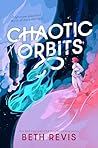 Chaotic Orbits
 by Beth Revis
My rating: 5 of 5 stars
This trilogy of novellas by Beth Revis, collectively together is the perfect omnibus of fun, science fiction, silly quips, and yet has many severely perilous moments. To say I adore the Chaotic Orbits trilogy is a bit of an understatement. It’s very rare I read books one after another in a series. Generally I spread them out by a few books and/or months to ensure I don’t get bored or tired of the story, setting, or characters. In the case of these ones I was dying to read the next book immediately, and so took the chance reading all three of these stories within one year. And it was the right choice!
Science fiction can be one of those genres that’s very hard for newer readers, or new to sci-fi to break into. There’s a lot of garbage, and a huge variance between the sub genres with hard science, space opera, survival dystopia, and sci-fi horror all sitting at many folks limits of what they are interested in or can handle. Chaotic Orbits has none of these problems. This cozy, humorous, yet deadly series is easily accessible to anyone while still being engaging for the average sci-fi reader (like myself). Be warned, the blurbs may make it seem like there is romance here, it’s very very mild and not a key piece of the final instalment as the synopsis might make you think.
If you enjoy Murderbot, Firefly/Serenity, Automatic Noodles, or Themis series you’ll likely enjoy this series. I’m super glad to see it in this omnibus as my reason for not giving each book individually 5 stars is because it was broken up and feels like a cash grab. A very ironic thing given the anti-capitalist rhetoric throughout by our leading lady. Therefore, this opportunity to get all 3 stories continuously is key. Keep in mind all three novellas together is barely the length of your average book, so it’s not even that big of a time commitment!
I’ll be picking up a copy in this format to add to my print shelf as I could see myself coming back to this one day. Plus the cover art is gorgeous!!
Please note: I received an eARC of this book from the publisher via NetGalley. This is an honest and unbiased review.
Follow me on Goodreads
 Make Me Better
 by Sarah Gailey
My rating: 4 of 5 stars
Sarah Gailey has written a bit of a slog (as in crazy slow burn). The kind of book that Stephen King would write, if you will. A bit too detailed and over written, in my opinion. A novel that takes forever to get through, and yet one you can’t quite give up on or put down as you must know how it ends. I both hated this, and was entranced by it. It was both tame in its horror and yet chillingly awful in the end.
Make Me Better is a number of movies I have seen put together into a novel with unreliable narrators, timelines that swap randomly, and a puzzle that eventually you see and yet wish you hadn’t. It is Midsommar meets The Island (Leo version) meets Mother (with Jennifer Lawrence). Taking all the creepy, disturbing indoctrination and mixing it together to give you a community that seems like the right answer, even when you know it isn’t. Gailey convinces the reader that what our MC is experiencing and thinking is perfectly normal, because in a way it is… even when we know in our gut there’s nothing normal about it.
If you ever wanted to understand why or how people are lured into a cult then this is the book to read. Perhaps you’ll even find yourself agreeing in the end that the horrific price of staying is worth it… or maybe you’ll shiver at how easy it was to follow along and nod. Even knowing you’re reading a horror novel that lacks the gore, jump scares, traditional monsters, or savage slasher moments the genre is known for; yet still has obviously horrific events.
I don’t want to say too much as I think this one is best experienced as it is without much foreknowledge except that it’s a cult and nothing is as it seems. However, I do want you to know that I really struggled to get through almost 65% of it. I had to convince myself to keep reading even when it seemed dull and obvious what was happening. A bit ironic given that our MC is at times feeling so disconnected from the experience as well.
The question, is the pay off worth the work?
For some it will be. For me it was just enough to eke out 4 stars right now. Maybe in a couple days I’ll return and drop it. We will see.
While I’m glad to have completed the book; I’m also glad to return my print copy to the library and not come back to it. I might recommend it for the right person who desires a study of cults or to understand how people become so blind to what is truly around them. Mostly, I think I’ll tell folks to stay away as it is not an enjoyable read per se. However, Make Me Better is a read, I suspect, I will think of in the future when I’m asking myself why I care, why I feel motivated, or why I’m reacting in certain ways. If only to ensure it’s not just because someone told me I should be a certain way.
There’s a mantra somewhere in it all, but it’s too creepy to write or say as that is much too close to assimilation for comfort. If there was something to take away it might go like this: May I always be turned off by the idea of ‘forced’ community and ensure I’m evaluating what’s happening through my own morales and eyes, not by what someone else told me is ‘right’.
Please note: I received an eARC of this book from the publisher via NetGalley. This is an honest and unbiased review.
Follow me on Goodreads
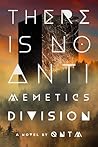 There Is No Antimemetics Division
 by qntm
My rating: 5 of 5 stars
How do you explain how mind bending a book is when you are not even sure how it ended or what it is conceptualizing?
The core idea here is: how do you fight an entity you cannot perceive or even know exists; as the moment you know it exists you are compromised?
This is one of the most engaging, cosmically horrific, and yet wildly creative scientific engagements I’ve ever encountered. It’s so much more than just a book or story. It’s an idea, a commentary on the world that could only be understood if you lived in our world today. A world with the internet, socials, memes, viral knowledge, misinformation, paranoia post pandemic, and terror of terrorism in your own backyard. I believe if read in 1992 this book would be nonsense and couldn’t evoke the same horror it does today as the ideas would be too abstract. While today they are difficult and make your brain really think, the idea is tangible enough and one that makes the reader question everything around them including the oxygen they are breathing.
I may never ever NOT wonder about white worms wriggling in my overall existence or shadowy figures or spider-like entities or or or. These ideas and antimemes, if you will, are going to stay with me forever. The way that ‘he was a ghost the whole time’ has since I saw The Sixth Sense in high school (when it was first released).
It’s the kind of story that just makes you pause at moments and question everything around you. While reading it I started having ideas for stories I could write that explain away other phenom in our world based on the idea of an antimeme existing. It had me wondering things like, maybe that Déjà vu moment isn’t a glitch in the Matrix, but a mnestic drug side effect (once you’ve read this you will understand what I mean)!
The most surprising part of this novel is the love story embedded at its core. I am surprised no one really talks about the woven in ideal of love being one thing that really sets humans apart. Arguably, what is humanity without love and how powerful can it be… If you forget all the cosmically horrific ideas here and only come to understand the Quinn’s relationship (or non-relationship) then it begs the question: what kind of love does it take to save the world? And yet, it didn’t have to be this particular path that gets us to the end, but I do think it is interesting the author chose the path he did. A lot more should be said about the love story than seems to have been said to date, in my opinion.
I truly believe this is the kind of book and idea that will live on long after its initial readers, author, and fandom has gone. There Is No Antimemetics Division asks you to conceptualize that everything you know is not at all the way you know it. And it does it in such a way that once you start to wonder or get it you are trapped in its horror and unable to escape.
A warning: this is also the kind of book that if you don’t ’get it’ or aren’t pulled in by the idea then you will hate it. I can absolutely see why some detest it. I believe you must go in with an open mind, and ready to really process a reframing of our world. If not you may think it’s ridiculous, stupid, or too complicated. I would recommend going in with only the knowledge that this book is going to ask you to change the way you think about reality, the way the Matrix, Interstellar, Dark Matter, and Piranesi do. If you are not ready to work for the knowledge in this mere 275 page book then you will get nothing out of it. But if you give it your attention and really allow the ideas to expand your mind then I believe you can walk away different.
I read many, many passages twice and in just the last hour of thinking about it have re-read the epilogue three times. This is a book that will occupy my brain for a long time to come (I think) and may very well be the best science fiction book I’ve ever read. I couldn’t have imagined anything hitting like Childhood’s End did when I was 13 yrs old; but this may very well have done it. The kind of book that once you’ve read it you can’t remember what it was like to not read it. (An irony that tickles me given the ideas presented in the narrative!)
If this review feels a bit contradictory, mysterious, or otherwise like you’re missing something that is because without reading the story my little nods likely mean nothing. But once you’ve read the book, come back here and let me know if reading it changed your take on what I’m saying. I’d love to know if I gave just enough to tickle someone’s brain into wanting to read it, while still being too specific. Don’t go looking for spoilers, but don’t worry too much either. It would be hard to understand a spoiler without experiencing the novel itself.
This is a book that is an experience as much as a story. See where your mind goes when asked to think about the impossible, that which cannot be perceived, and then think about how you fight it to save everything, when you don’t remember, or even know, it exists. And then ask yourself how different the world could really be after you read this. Then read it. And come let me know if you’re a hater, or you too had your mind expanded (like me, and so many others) who cannot remember what it was like before we had the antimemes knowledge in our brains.
Follow me on Goodreads

